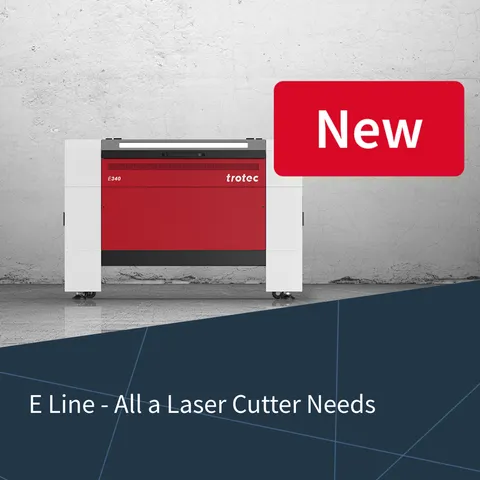
Laser processing on acrylic
Reliable, High-Quality Acrylic Processing for Professional Production Environments
CO₂ lasers are highly effective for cutting and engraving acrylic, delivering consistent, high-quality results across a wide range of professional applications, including signage, industrial components, displays, and serial production parts.
In professional production environments, visual quality alone is not enough. Stable processes, repeatable results, and efficient workflows are critical to maintaining productivity and profitability. Selecting the right material, optimizing machine setup, and standardizing parameter management are essential steps toward minimizing setup time and reducing material waste.
This guide provides practical recommendations for selecting suitable acrylic types and configuring your laser system to achieve consistent edge quality, high process stability, and reliable results across operators and production runs.
Material types and characteristics
Material selection: choosing the right acrylic for your production goals
Acrylic is available in two main types—cast (GS) and extruded (XT). Choosing the right material plays a key role in achieving the desired quality level, dimensional accuracy, and production efficiency.

Cast acrylic (GS)- for high-quality visual applications
Cast acrylic is the preferred choice when visual quality and engraving performance are the primary requirements. It is produced by pouring liquid acrylic between two glass plates resulting in a homogeneous, stress‑free material with identical mechanical properties in the x and y directions.
Recommended for:
- Applications where optical edge quality is critical
- Engraved products requiring strong contrast and a white finish
- Premium signage, displays, and branded components
Production characteristics:
- Produces clean, burr-free cut edges on both sides
- Delivers bright, high-contrast white engraving results
- Higher thickness tolerance (approx. ±15%), which must be considered for precision-fit applications
- Higher material cost, but typically reduces post-processing effort and supports premium product quality
When to choose GS:
Select cast acrylic when edge quality, engraving results, and overall visual appearance are the priority, even if tight tolerances are less critical.
Trotec’s cast acrylic materials, including TroGlass Color Gloss and TroGlass Clear, are designed for reliable processing and consistent visual quality.
Extruded acrylic (XT)- for efficient and scalable production
Extruded acrylic is better suited for applications that require dimensional accuracy, efficiency, and cost control. It is produced by extruding acrylic mass through a nozzle to achieve the desired thickness. Due to this manufacturing method, the mechanical properties differ in the x and y directions.
Recommended for:
- Series production with assembly or plug-fit requirements
- Applications that require tight tolerances and repeatability
- Cost-sensitive production environments
Production characteristics:
- Lower thickness tolerance (approx. ±5%), supporting precise fit and consistent results
- Requires less laser power, enabling faster processing and higher throughput
- Produces a flame-polished edge, with slight variation between top and bottom surfaces
- Limited engraving performance (matte gray), making it less suitable for contrast-driven applications
When to choose XT:
Select extruded acrylic when the priority is efficient processing, dimensional consistency, and scalable production at lower cost.
Trotec’s TroGlass XT or TroGlass Mirror is optimized for laser processing and supports stable, repeatable performance in serial production environments.
Material selection by production priority
| Production goal | Recommended material |
|---|---|
| Maximum edge quality and engraving contrast | Cast acrylic (GS) |
| Tight tolerances and precise fit | Extruded acrylic (XT) |
| Premium visual applications | Cast acrylic (GS) |
| Cost-efficient series production | Extruded acrylic (XT) |
| Reduced post-processing | Cast acrylic (GS) |
| High throughput and lower consumption | Extruded acrylic (XT) |
Laser processing guidelines
The following guidelines provide essential reference points for accurate and efficient laser processing of acrylic.
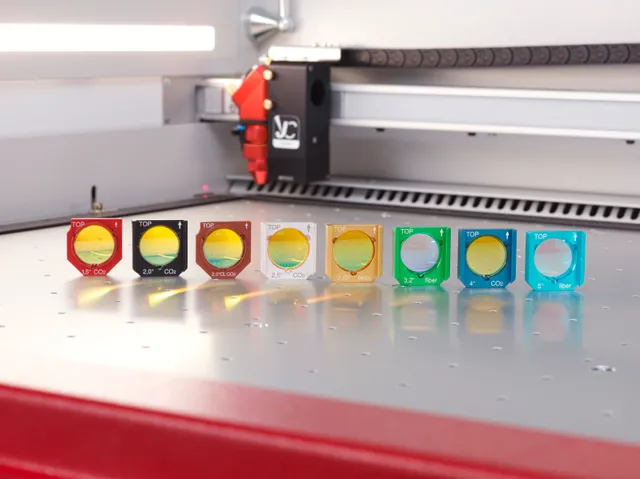
Lens selection
Choosing the correct lens is essential for achieving consistent cutting results. As material thickness increases, a longer focal length is recommended.
- Use a 2.0" lens for most applications
- For materials thicker than 5 mm, a 2.5" lens can improve edge quality
- Regular lens cleaning is critical to maintaining beam quality and repeatability
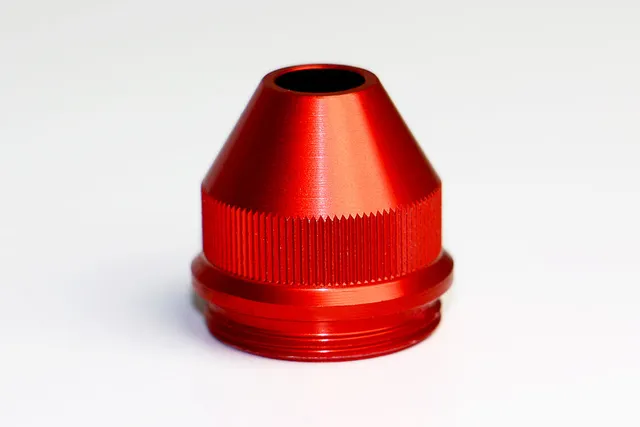
Nozzle and Air Assist
- Use a large-diameter nozzle when cutting acrylic.
- Reduce air assist to a maximum of 0.2 bar, if possible. This gives the material enough time to cool slowly, resulting in glass‑clear, polished edges.
- Excessive air pressure leads to milky or dull edges due to rapid cooling
- Consistent low pressure helps maintain stable results, especially during longer production runs.
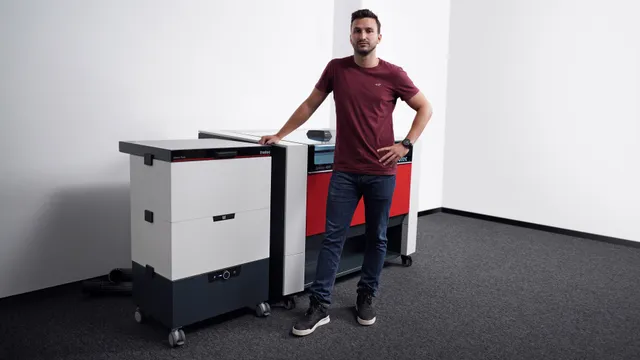
Exhaust System
Effective extraction is essential for both process quality and safety.
- Proper ventilation ensures clean edges and stable processing conditions
- Insufficient airflow can lead to vapor accumulation and increase fire risk
- Consistent exhaust performance supports repeatable production results
Laser systems should never be left unattended.
Trotec’s Atmos exhaust systems, combined with Ruby®, help maintain stable airflow and reliable operating conditions.
Work tables
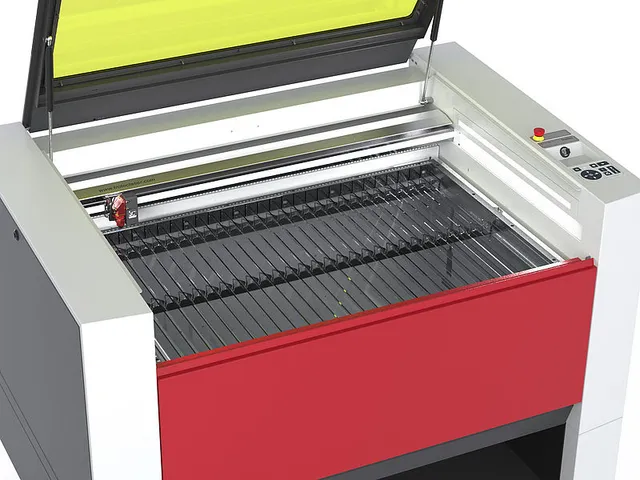
Selecting the correct work table is important for stable positioning and part quality. Trotec offers several table options depending on the size and thickness of the application. We recommend using either the acrylic slat cutting table or the acrylic cutting grid table, depending on the job.
Acrylic slat cutting table
- Prevents kick back during cutting
- Recommended for thicker materials (≥ 6 mm)
- Suitable for larger components (>100 mm)
Acrylic grid cutting table
- Keeps smaller parts stable and flat after cutting
- Recommended for materials up to 8 mm thick
Laser power
Laser power has a direct impact on processing speed, edge quality, and overall productivity.
The required power depends on:
- Material thickness
- Desired edge quality
- Throughput requirements
Higher power systems can significantly improve processing speed, especially for thicker materials and production environments with higher output requirements. However, optimal results always depend on a balanced combination of power, speed, and frequency.
As a general guideline, increasing material thickness requires a proportionally higher laser power. For efficient processing of medium to thicker acrylic, higher power systems (e.g., 60 W and above) can improve throughput and reduce processing time. As a rule of thumb, 10 watts of laser power per 1 mm material thickness is ideal.


Parameter settings
Laser parameters depend on material type, thickness, and desired finish. Standardized settings are critical for ensuring repeatable, operator-independent results.
With Ruby®, both cutting and engraving parameters can be standardized using material presets and job templates, ensuring repeatability, efficiency, and consistent quality across operators.
Parameters for laser cutting acrylic
Acrylic reqires relatively high frequency to achieve smooth edges.
Typical frequency ranges:
- Cast acrylic (GS): 5,000–20,000 Hz
- Extruded acrylic (XT): up to 5,000 Hz
Incorrect settings may result in:
- Low frequency: visible chatter marks
- Low speed: wider kerf and increased fire risk
Balancing power, speed, and frequency is essential for safe and efficient processing.
Parameters for laser engraving acrylic
For engraving, lower energy typically produces better results.
- Light surface engraving creates high-contrast white results
- Excessive power reduces contrast
Best practice:
- Engrave from the reverse side for improved durability and appearance
- Always mirror the design before processing
Graphic and software preparation
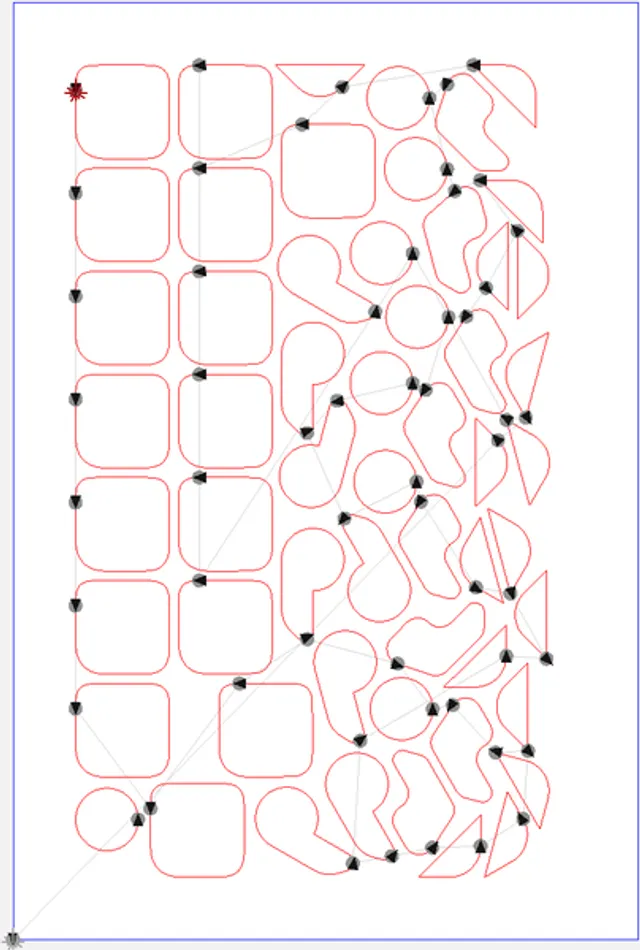
Optimized design data improves processing quality and reduces fire risk.
- Reduce node count for smoother cutting paths.
- Fewer nodes = smoother motion and more homogeneous edges
- Place start points in less noticeable areas. Avoid placing them on straight lines or in the middle of curves
- Use lead-ins (3–8 mm) for thicker materials.
- Optimize cutting order to reduce heat buildup
Ruby® laser Software – advantages for acrylic processing
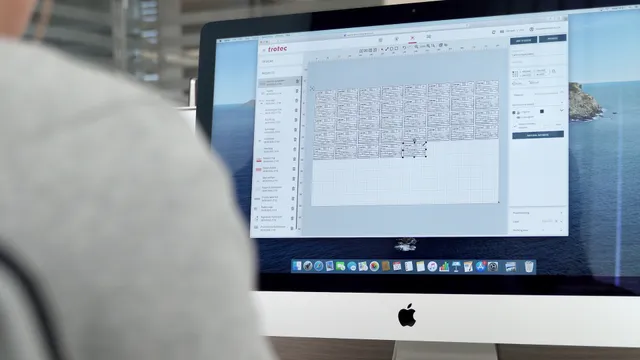
Ruby® simplifies parameter management and supports consistent processing results.
Key capabilities:
- Separate parameter sets for GS and XT
- Combined control of laser and exhaust settings
- Material effects for fine-tuning results
- Standardized job templates
Once optimized, settings can be reused at any time, ensuring efficient workflows and consistent output.
Trotec acrylic materials for reliable production
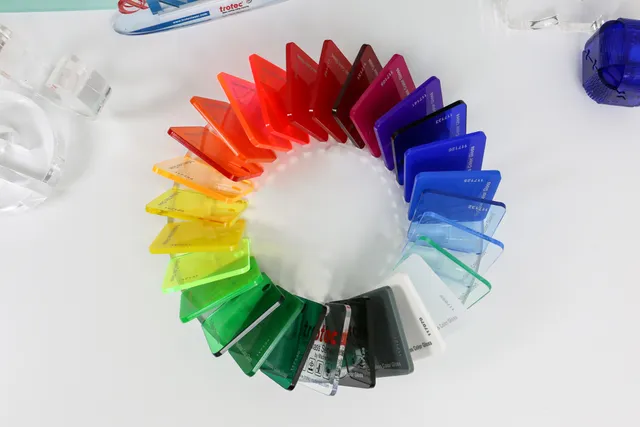
Material quality directly impacts processing stability, edge quality, and overall efficiency. Trotec’s TroGlass acrylic range is developed specifically for laser applications, ensuring predictable and repeatable results.
Using materials optimized for laser processing reduces parameter adjustments, shortens setup time, and ensures consistent results across jobs, machines, and operators.
Key Advantages
- Consistent material quality: Supports stable processing and repeatable results
- Reliable performance: Ensures clean edges and consistent engraving quality
- Reduced setup effort: Minimizes trial-and-error adjustments
- Workflow integration: Works seamlessly with Ruby® presets and templates for scalable production
The TroGlass portfolio includes both cast and extruded acrylic in various thicknesses, colors, and finishes, allowing flexibility without compromising processing reliability.
Explore Trotec acrylic materials for stable, repeatable prodution results.