Laser Engraving Productivity Starts Before the Laser Machine
Laser engraving productivity is often associated with machine speed and power, but true efficiency begins long before production starts. From job intake and file preparation to material setup and quality control, every stage of the workflow impacts output. Companies that optimize the entire laser production process—not just the laser system—achieve higher throughput, fewer errors, and more consistent results.
When manufacturing companies think about improving laser engraving productivity, they often focus on one thing: the laser machine. Faster speed, higher power, or larger working areas are seen as the primary drivers of output.
But in reality, the biggest productivity gains don’t start at the laser - they start long before the job reaches the machine.
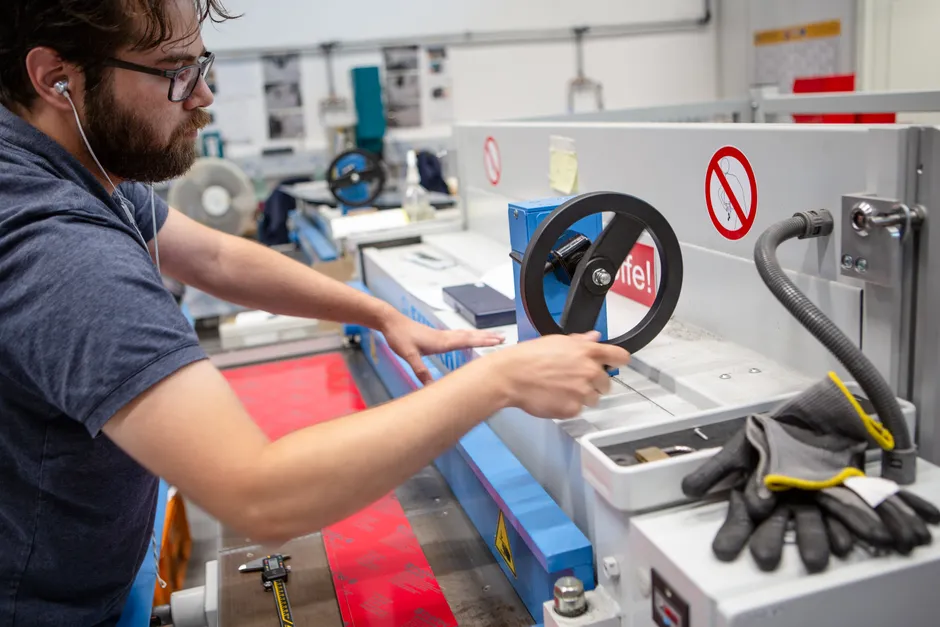
A modern laser engraving workflow is a connected process that begins with job intake, continues through file preparation and setup, and includes the physical handling of materials - such as loading and positioning the workpiece - before moving into production, followed by quality control.
Companies that optimize this entire workflow, not just the hardware, achieve significantly higher throughput, fewer errors, and more predictable results.
A modern laser engraving workflow is a connected process that begins with job intake, continues through file preparation and setup, and includes the physical handling of materials—such as loading and positioning the workpiece—before moving into production, followed by quality control.
Also read: Laser Software Automation: How Ruby Takes You from Manual to API
Choosing professional laser engraving and cutting systems for workflow efficiency
Not all professional laser engraving and cutting systems are designed with laser production workflow efficiency in mind. Traditional setups often rely on disconnected tools, manual data handling, and operator-dependent processes - typically the result of workflows that have evolved over many years without being systematically reviewed for productivity potential. This often leads to the parallel use of multiple software solutions and a strong reliance on individual user expertise, increasing complexity and limiting efficiency.
Common workflow bottle necks include:
- Manual file handling and retyping of orders
- Lack of transparency in job queues
- Repeated setup work for recurring jobs
- Errors caused by inconsistent settings or file versions
Modern laser workflow systems approach this differently. Instead of treating the laser as an isolated tool, they integrate the full laser production workflow—from order intake to execution.
For example: advanced workflow-driven environments often include:
- Automated import of job data replaces manual entry
- Central job management keeps teams aligned by providing a single source of truth—enabling ready-designed jobs to be easily recalled, reused, and reproduced quickly, ensuring consistency while reducing preparation time and dependency on individual operators.
- Standardized templates reduce setup time
- Multi-user environments allow parallel job preparation while the machine is running
The result is simple: higher utilization without increasing machine time.
Best workflow software for industrial laser engraving and cutting
At the heart of an efficient industrial laser workflow is software.
Laser engraving and cutting production environments today require more than just a job-sending interface. They need a system that structures the entire process:
- Job preparation
- Data validation
- Parameter control
- Execution and monitoring
- Job data documentation
Modern laser shop workflow management platforms enable:
- Automated data exchange via APIs or workflow tools
- Role-based access to prevent incorrect settings
- Standardized job templates for repeatability
- Validation steps to avoid production errors
This transforms software from a simple interface into a workflow platform.
Instead of relying on operator experience, processes become:
- Repeatable
- Scalable
- Less error-prone
- Less dependent from expert knowledge
Especially in manufacturing environments, this shift is critical for maintaining quality across shifts, operators, and multiple machines.
How modern laser systems improve production capacity
Increasing capacity is not just about speed—it’s about reducing downtime and inefficiencies across the workflow.
Modern systems improve laser engraving productivity by addressing the real bottlenecks:
- Parallelization of work
In a well structured laser engraving workflow operators can prepare jobs while the laser is processing another job, eliminating idle time.
- Faster setup and changeovers
Ergonomic machine design and structured laser workflows reduce the time required to switch between materials or jobs.
- Accurate positioning
Camera systems and visual alignment tools reduce misplacement - a major source of scrap in many applications.
- Consistent material processing
Material databases and predefined parameters minimize trial-and-error and ensure consistent results.
- Real time monitoring
Connected systems provide visibility into machine status, helping teams optimize planning and react quickly to issues.
Together, these improvements create a high-efficiency laser manufacturing workflow, where the machine is continuously productive.
Laser engraving productivity isn't won or lost at the laser — it's won or lost in the four stages that happen around it. Shops that treat job intake, file prep, and setup as part of the production process, not separate from it, get more consistent output without touching machine speed.